Bold Label and our team take every website project seriously because our work is our value. The goal is simple. Deliver high quality custom work, but keep revision time low so projects move fast. That only happens when the process is clear and each stage does the heavy lifting before the next one starts.
1) Planning process (where the real results start)
Most newer clients are surprised by how much thinking goes into planning. This stage is not “just a call.” It’s where we protect your SEO, your conversions, and the structure of your site.
One real example: a brand had two very similar products competing for the same keywords. We knew this would likely cause keyword cannibalization, meaning both pages weaken each other instead of ranking strongly. In the planning stage, we reworked the content and layout so the offer became one product with three tier packages. That created a clear 3 package layout plan, improved clarity for users, and gave search engines one strong topic to rank.
Situations like this happen often. And they only get solved when the client gives clear direction and collaborates with our project manager. Planning is not extra work. It’s the shortcut to fewer revisions later.
2) UIUX design process in Figma (make it real before we build)
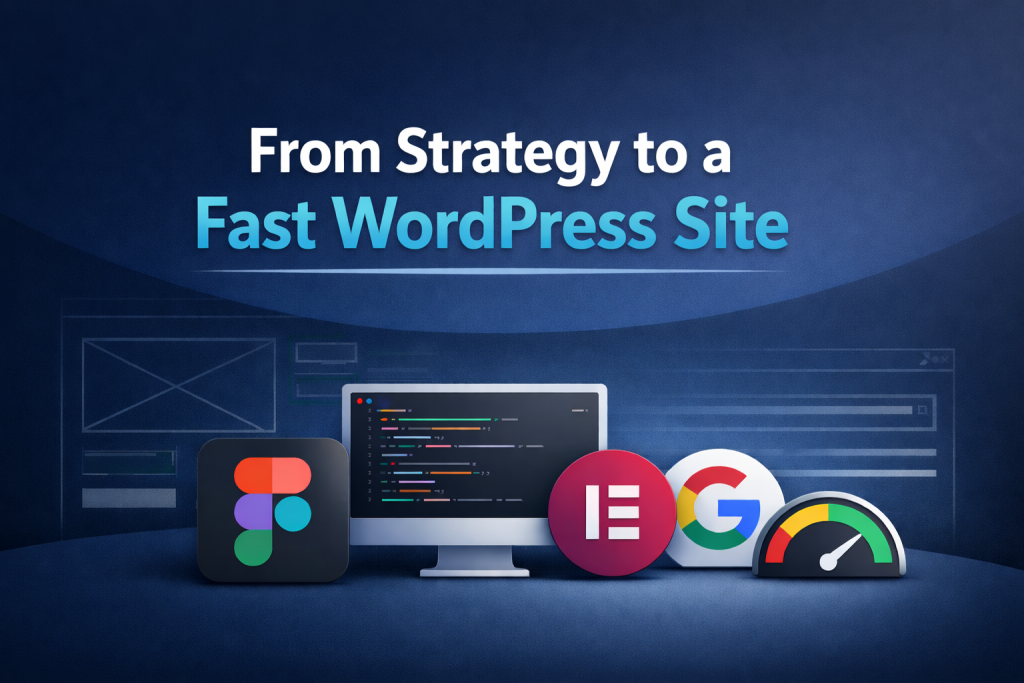
After planning, we move into the UIUX design process using Figma. This is where we lock down the visual system: fonts, buttons, spacing, section layout, and the overall look and feel.
Layouts are designed exactly around the client’s goals and requirements, not a generic template. At the same time, we always add a layer of uniqueness so every site feels original. That’s why our portfolio stays diverse.
Figma also helps reduce revision time. You can see the full experience before development starts, so feedback is faster and clearer.
3) Approval and revisions (tight rounds, focused feedback)
We do revisions in structured rounds. Instead of random tweaks forever, we aim for focused feedback that matches the plan. When the design is approved, the rest becomes smoother.
4) Development in Elementor (execution, not guesswork)
Then we build the site in WordPress using Elementor. This stage is technical, but it usually needs fewer revisions because the hard decisions were already made in planning and Figma. Development becomes execution, not guessing.
5) QA, security, speed, and launch setup
Before launch, we run QA testing to catch layout issues across devices, fix small bugs, and confirm everything works as expected. We also handle site security and speed optimizations.
Finally, we connect what matters for growth: Google Search Console, analytics, and tracking tools depending on your package and needs. Then we launch cleanly, with confidence.